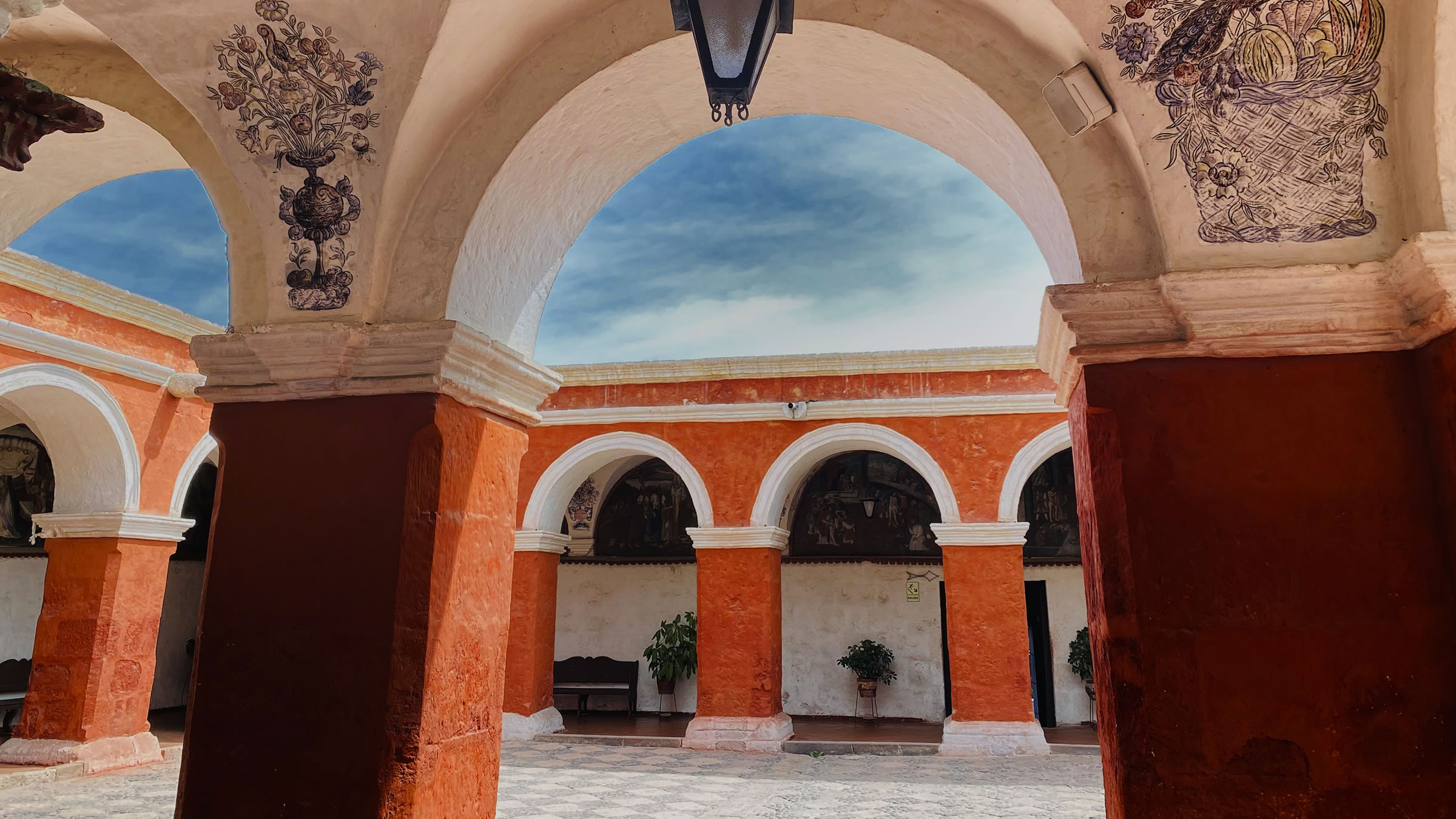
HISTORY · FOUNDING
A founding inspired by faith — 1579
The origin of a legacy that crosses centuries
Doña María de Guzmán entrusted her fortune to bring the Monastery of Santa Catalina to life — a spiritual refuge for consecrated women. More than four centuries later, her legacy still lives on within these walls.
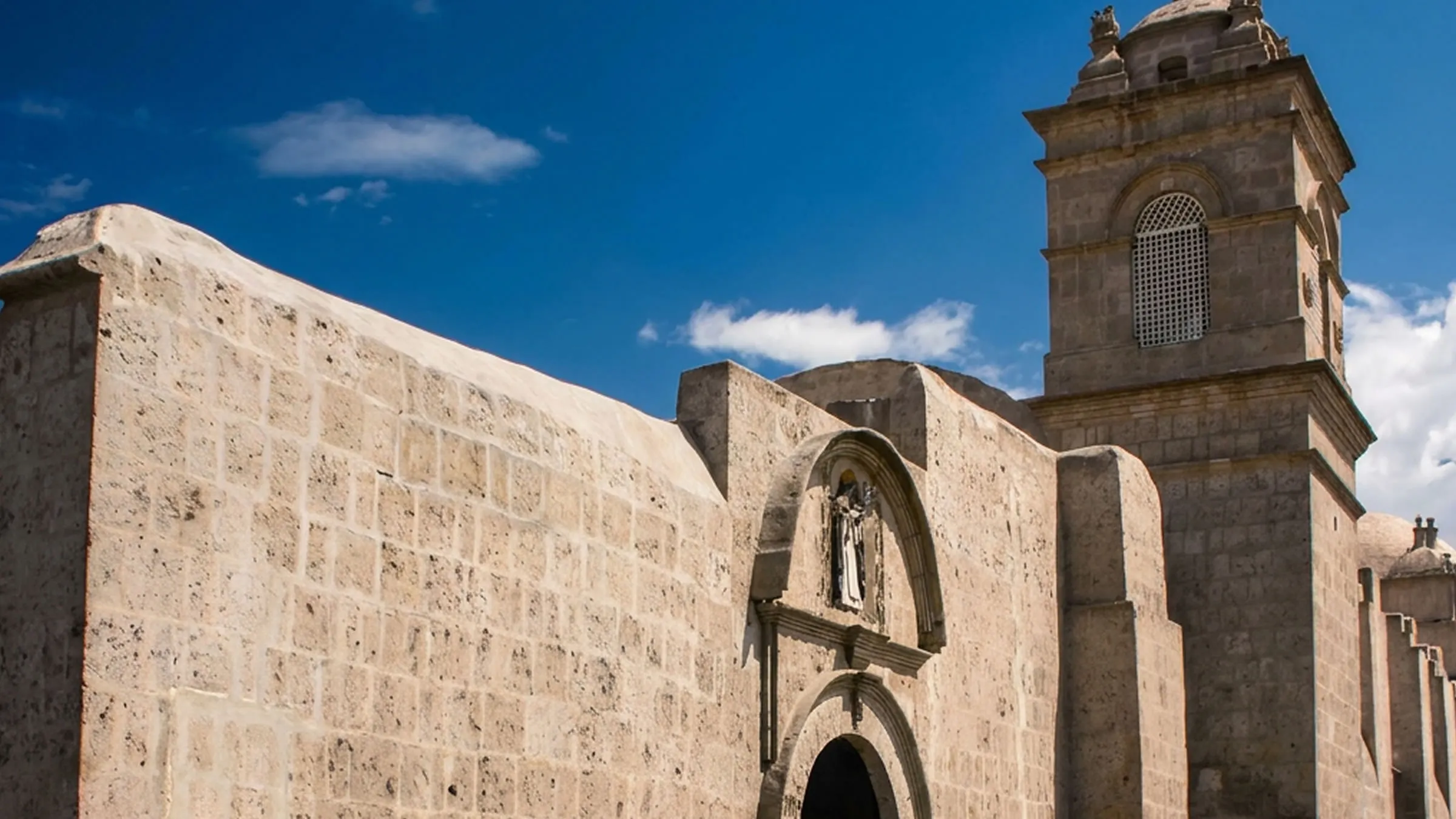
In 1579, in a young Arequipa still under construction, doña María de Guzmán — a wealthy widow of deep faith — decided to devote her fortune to creating a monastery dedicated to Saint Catherine of Siena. The authorisation came from viceroy Francisco de Toledo, and the founding act, signed on 10 September, was endorsed by the Cabildo of Arequipa and the bishopric of Cuzco — for the city did not yet have its own archbishopric. That decision, made in a time of religious fervour and colonial consolidation, gave rise to one of the most remarkable monastic complexes on the continent.
The monastery was conceived above all as a refuge for the daughters of Arequipa's wealthier criollo and mestizo families, many of whom could not marry due to a lack of dowry. Over time it also welcomed novices of more modest means, while servants and lay women supported the everyday life of the precinct. Behind the sillar walls, a self- sufficient community took shape, with streets, plazas and passageways that echoed the Andalusian cities of its origin.
Doña María de Guzmán and the early years
María de Guzmán was named the first inhabitant and prioress of the monastery, a role she held during its earliest years. The founding promise was simple: to raise a place where contemplative life could flourish under the protection of the Dominican Order. The first cloister, modest and functional, marked the start of an expansion that would unfold over more than two centuries.
The 1582 earthquake and the rebuilding
Barely three years after the founding, a violent earthquake shook Arequipa and severely damaged the first buildings. Far from halting the project, the community embarked on a patient reconstruction, drawing on the abundance of sillar — the white and pink volcanic stone of the Chachani and Misti volcanoes that would give the monastery its unmistakable character. Over the following centuries, further seismic events (1687, 1784, 1868) called for new restorations that the monastery always managed to absorb.
Through those centuries the monastery grew in silence, adding cloisters, cells, courtyards and chapels. Each generation left its mark, shaping an architectural palimpsest that today reads like a city suspended in time.
A living legacy
More than four hundred years on, doña María de Guzmán's legacy is still alive. The nuns continue to inhabit a reserved area of the monastery, while since 15 August 1970 the rest has been open to the public to share this heritage memory with the world.
"Sharing this heritage memory with the world"
Historical milestones
Key moments in our history
1579
Founding of the monastery
1582
An earthquake damages the original buildings
1715–1723
Construction of the Main Cloister
1748
Building of the bell tower
1944
Declared National Cultural Heritage of Peru
1970
Opens to the public (15 August)
2000
Inscribed on the UNESCO List as part of the Historic Centre
Today
More than 400 years of living history
-
1579
Founding of the monastery
-
1582
An earthquake damages the original buildings
-
1715–1723
Construction of the Main Cloister
-
1748
Building of the bell tower
-
1944
Declared National Cultural Heritage of Peru
-
1970
Opens to the public (15 August)
-
2000
Inscribed on the UNESCO List as part of the Historic Centre
-
Today
More than 400 years of living history