HISTORY · ARCHITECTURE
Sillar, masonry and arcades
The architectural secrets of a monastery built to outlast the centuries
The monastery was built mirroring the urban layout of colonial Arequipa. Four districts, inner streets and cloisters make up more than 20,000 square metres of unique architecture.
The Monastery of Santa Catalina occupies more than 20,000 square metres in the heart of Arequipa's historic centre. Its layout is no accident: it mirrors, on an intimate scale, the urban grid of the early colonial city — with streets, plazas and districts named after old Spanish cities: Seville, Córdoba, Toledo, Granada, Málaga and Burgos.
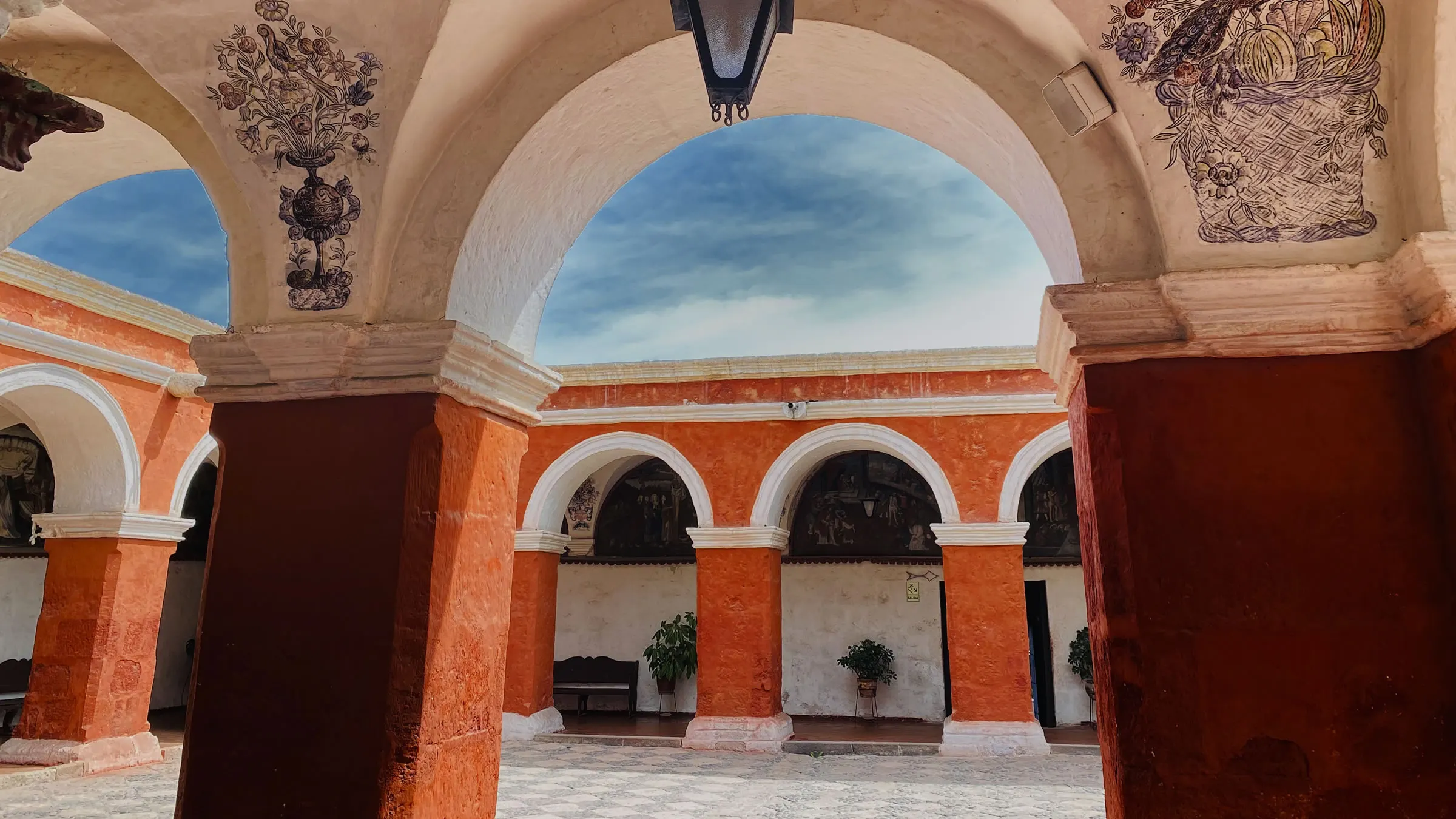
To walk through its streets is to cross centuries. Light bounces off walls of sillar — that white and pink volcanic tuff that defines the architecture of Arequipa — and filters through round arches that hold up vaulted ceilings.
Sillar, matter and memory
Quarried from the slopes of the Chachani (white sillar) and Misti (pink sillar) volcanoes, this stone made it possible to raise thick, sturdy walls — some up to four metres tall — able to absorb the seismic movements that are frequent in the region. Its pale, almost luminous tone defines the contemplative mood of the complex and is the reason Arequipa is known as the "White City".
Four districts, a small city
The nuns' cells are organised into four districts, each with its own plazas, fountains and courtyards. Many individual cells had their own kitchen, living room and bedroom — a peculiarity that grew out of the custom by which each nun, generally from a wealthy family, paid for and designed her own space. That autonomy enabled the community to sustain itself for centuries without depending on the outside world.
Arequipa, founded in 1540, was chosen for its natural beauty, its mild climate and the abundance of a unique building material: sillar, a porous and remarkably light volcanic tuff that allowed builders to raise forms of striking aesthetic value, with imposing façades and finely carved detail. This craft gave the city its identity and turned it into one of the most singular colonial centres in the continent. Its architectural style is fundamentally colonial, but mestizo in nature: in Santa Catalina the blending of Spanish and indigenous elements is especially visible, producing a creation of its own.
The earthquakes that shook Arequipa from 1582 onward destroyed the monastery's earliest buildings and also the properties of the nuns' families, on which the censuses securing the convent's future finances rested. From that circumstance the present-day citadel paradoxically emerged: faced with a damaged communal dormitory and a growing community, families chose to build individual cells for their daughters. For nearly two centuries the cloisters and cells were modified, expanded and rebuilt, weaving a true sampler of Arequipa's colonial architecture.
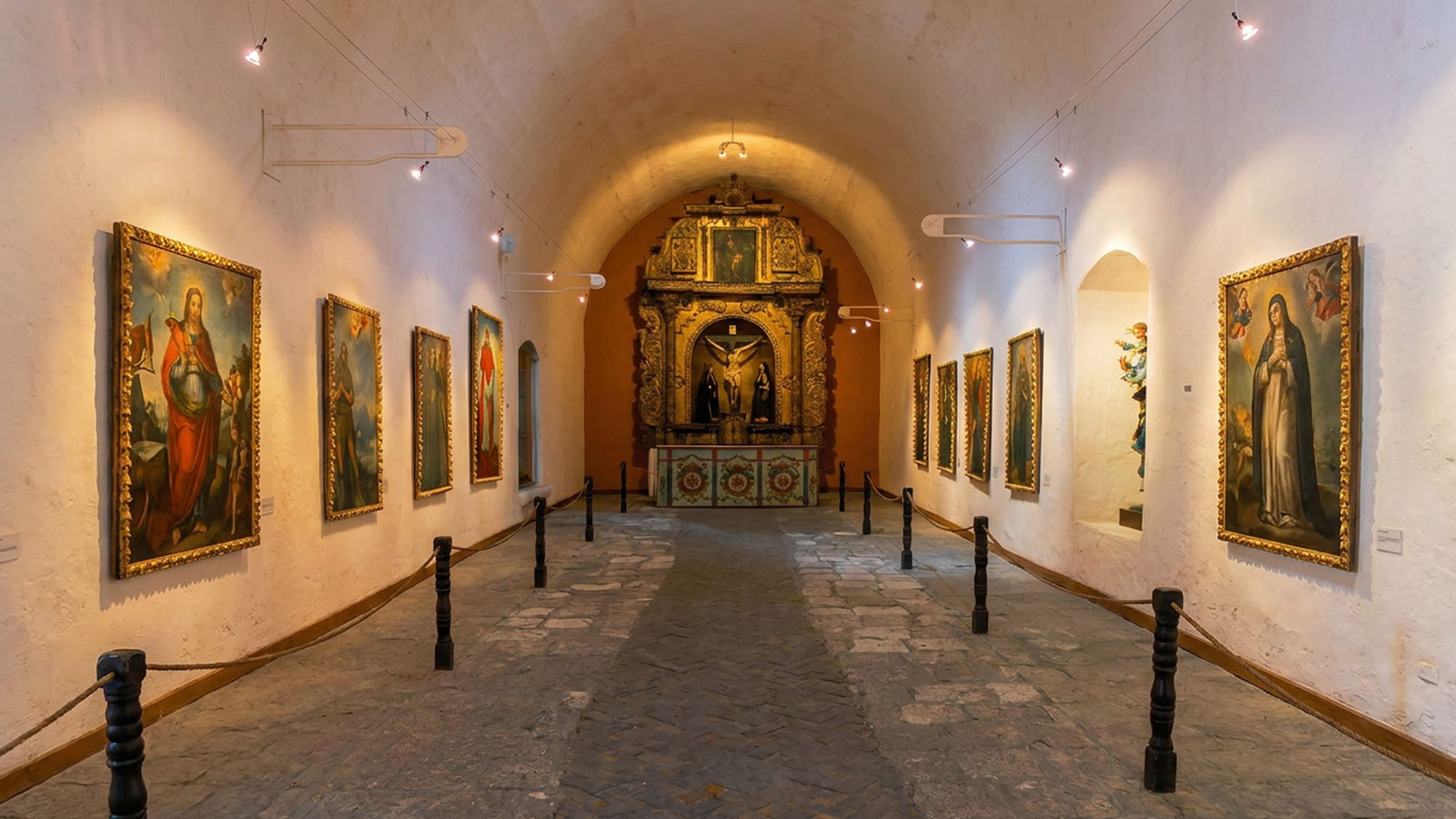
Barrel vaults, segmental arches and lateral buttresses form a coherent architectural vocabulary, refined by the craft of generations of Arequipa stonemasons.
"For monumental buildings in a land of bright light, no stone is more beautiful than sillar."